
Scoliosis Degrees Of Curvature Chart
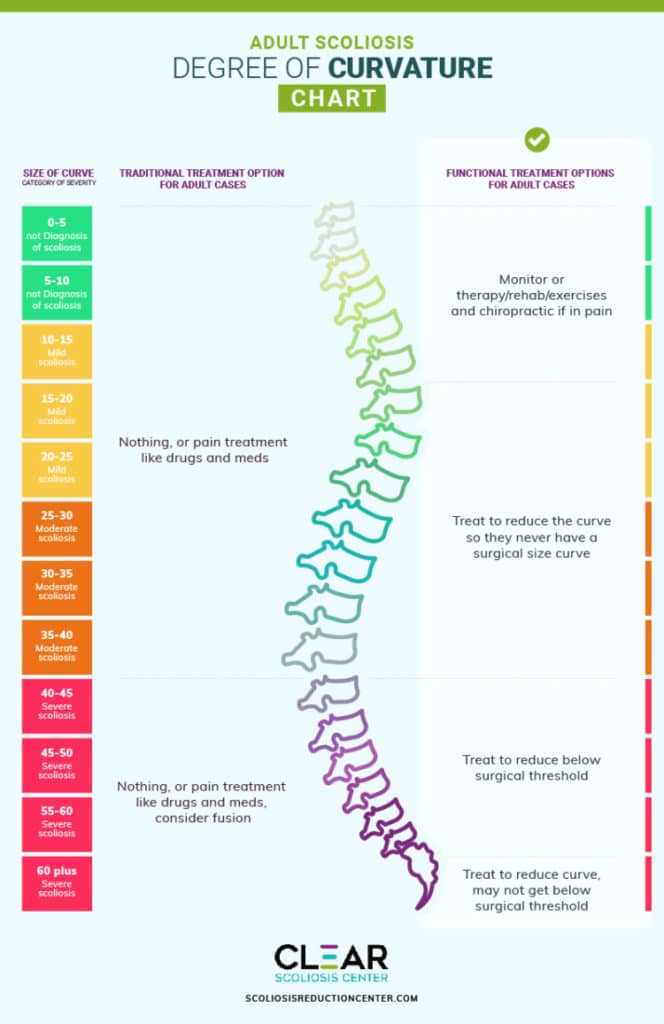
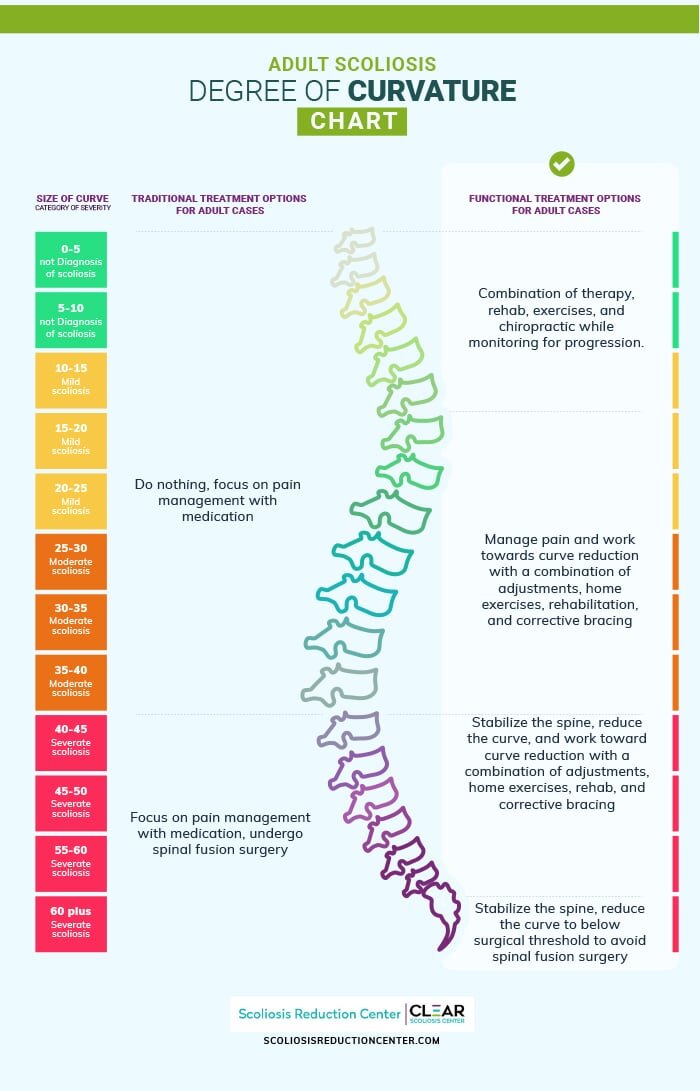
Scoliosis Degrees Of Curvature Chart - Web the scoliosis progression chart provides a detailed overview of the different degrees of curvature and helps healthcare professionals interpret the severity of the condition. Web the degrees of curvature chart is a pivotal classification system that breaks down scoliosis based on the severity of the spinal curvature. See our illustration which shows how cobb angle is determined by your doctor or radiologist. The cobb angle, named for orthopedic surgery pioneer john robert cobb, describes the distance a scoliotic curve may deviate from being straight. Any measurement greater than 10º is considered scoliosis. Curves that are less than 10 degrees are not considered to represent scoliosis, but rather a minor spinal asymmetry. Web there are two main scoliosis treatment approaches for patients to choose between, each offering a different potential outcome; A curvature that ranges between 10 to 25 degrees. Web the degrees of curvature chart categorizes the severity of scoliosis by assigning a degree of curvature number. With this measurement, doctors are able to judge the severity of the scoliosis, assess the. Any measurement greater than 10º is considered scoliosis. Web the degrees of curvature chart categorizes the severity of scoliosis by assigning a degree of curvature number. A curvature that ranges between 10 to 25 degrees. The higher the degree, the more severe the curvature and the greater the risk of serious medical complications. Web the degrees of curvature chart is a pivotal classification system that breaks down scoliosis based on the severity of the spinal curvature. Web cobb angle measurements between 10 and 25 degrees are classified as mild scoliosis; See our illustration which shows how cobb angle is determined by your doctor or radiologist. Cobb angle measurements between 25 and 40 degrees are diagnosed as moderate scoliosis, and 40+ degrees is classified as severe, while 80+ is considered very severe. Web someone is considered to have scoliosis when the spine has a sideways curvature of at least 10 degrees, which is measured by the cobb angle. With this measurement, doctors are able to judge the severity of the scoliosis, assess the. See our illustration which shows how cobb angle is determined by your doctor or radiologist. Web cobb angle measurements between 10 and 25 degrees are classified as mild scoliosis; Web there are two main scoliosis treatment approaches for patients to choose between, each offering a different potential outcome; Curves that are less than 10 degrees are not considered to represent. Web there are two main scoliosis treatment approaches for patients to choose between, each offering a different potential outcome; With this measurement, doctors are able to judge the severity of the scoliosis, assess the. Any measurement greater than 10º is considered scoliosis. Curves that are less than 10 degrees are not considered to represent scoliosis, but rather a minor spinal. Web the scoliosis progression chart provides a detailed overview of the different degrees of curvature and helps healthcare professionals interpret the severity of the condition. Follow along on the accompanying scoliosis degrees chart for a visual of how the traditional and functional treatment approaches address the various severity levels. Web the degrees of curvature chart is a pivotal classification system. Web cobb angle measurements between 10 and 25 degrees are classified as mild scoliosis; Web someone is considered to have scoliosis when the spine has a sideways curvature of at least 10 degrees, which is measured by the cobb angle. Web the degrees of curvature chart categorizes the severity of scoliosis by assigning a degree of curvature number. Scoliosis is. Web the scoliosis progression chart provides a detailed overview of the different degrees of curvature and helps healthcare professionals interpret the severity of the condition. The higher the degree, the more severe the curvature and the greater the risk of serious medical complications. Follow along on the accompanying scoliosis degrees chart for a visual of how the traditional and functional. Web someone is considered to have scoliosis when the spine has a sideways curvature of at least 10 degrees, which is measured by the cobb angle. Any measurement greater than 10º is considered scoliosis. Cobb angle measurements between 25 and 40 degrees are diagnosed as moderate scoliosis, and 40+ degrees is classified as severe, while 80+ is considered very severe.. A curvature that ranges between 10 to 25 degrees. The higher the degree, the more severe the curvature and the greater the risk of serious medical complications. Web here is a general outline of cobb angle ranges and what they could indicate in idiopathic scoliosis found in children and adolescents: Web the degrees of curvature chart is a pivotal classification. Web the degrees of curvature chart is a pivotal classification system that breaks down scoliosis based on the severity of the spinal curvature. Web cobb angle measurements between 10 and 25 degrees are classified as mild scoliosis; Factors such as age, symptoms, and treatment options vary depending on the degree of curvature. Web someone is considered to have scoliosis when. Web the degrees of curvature chart is a pivotal classification system that breaks down scoliosis based on the severity of the spinal curvature. Web someone is considered to have scoliosis when the spine has a sideways curvature of at least 10 degrees, which is measured by the cobb angle. Web the scoliosis progression chart provides a detailed overview of the. This classification is instrumental in determining the appropriate treatment path and includes three primary categories: See our illustration which shows how cobb angle is determined by your doctor or radiologist. Web the degrees of curvature chart is a pivotal classification system that breaks down scoliosis based on the severity of the spinal curvature. The higher the degree, the more severe. Curves that are less than 10 degrees are not considered to represent scoliosis, but rather a minor spinal asymmetry. Web here is a general outline of cobb angle ranges and what they could indicate in idiopathic scoliosis found in children and adolescents: The higher the degree, the more severe the curvature and the greater the risk of serious medical complications. Web there are two main scoliosis treatment approaches for patients to choose between, each offering a different potential outcome; The cobb angle, named for orthopedic surgery pioneer john robert cobb, describes the distance a scoliotic curve may deviate from being straight. See our illustration which shows how cobb angle is determined by your doctor or radiologist. Web someone is considered to have scoliosis when the spine has a sideways curvature of at least 10 degrees, which is measured by the cobb angle. Scoliosis is classified as mild, moderate or severe. Web the degrees of curvature chart categorizes the severity of scoliosis by assigning a degree of curvature number. Follow along on the accompanying scoliosis degrees chart for a visual of how the traditional and functional treatment approaches address the various severity levels. Any measurement greater than 10º is considered scoliosis. With this measurement, doctors are able to judge the severity of the scoliosis, assess the. Web the degrees of curvature chart is a pivotal classification system that breaks down scoliosis based on the severity of the spinal curvature. A curvature that ranges between 10 to 25 degrees. Web cobb angle measurements between 10 and 25 degrees are classified as mild scoliosis;
Scoliosis Degrees Of Curvature Chart
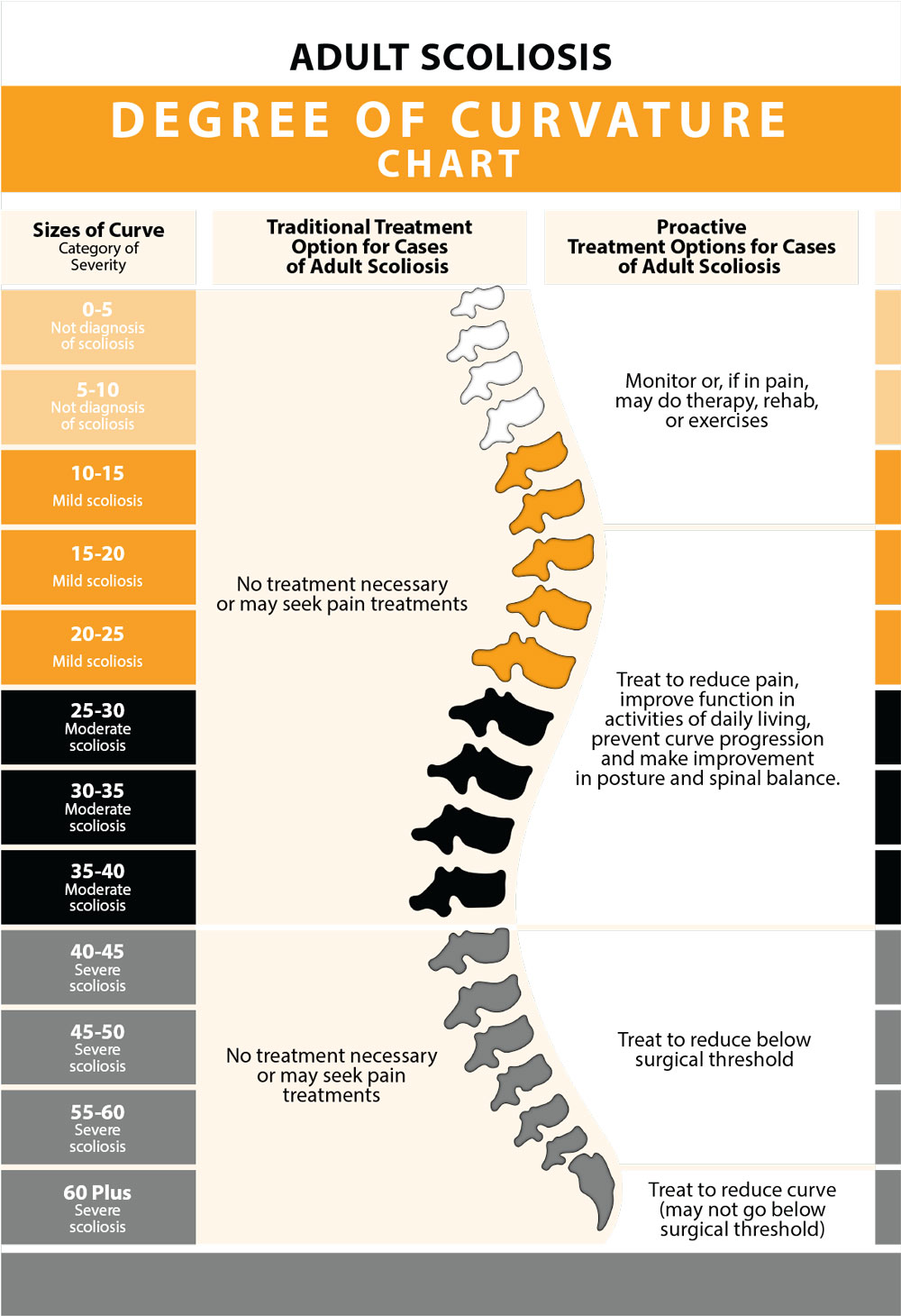
Exploring The Scoliosis Degrees Of Curvature Chart
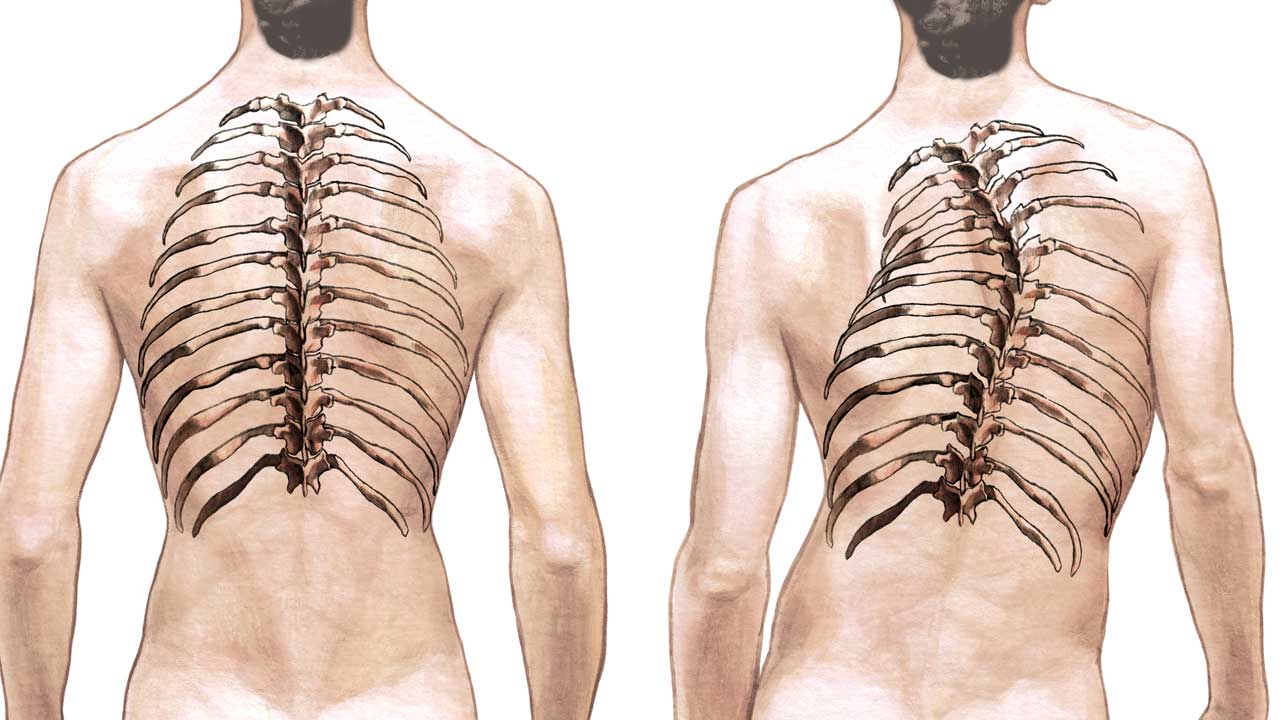
Scoliosis Degrees Of Curvature Chart
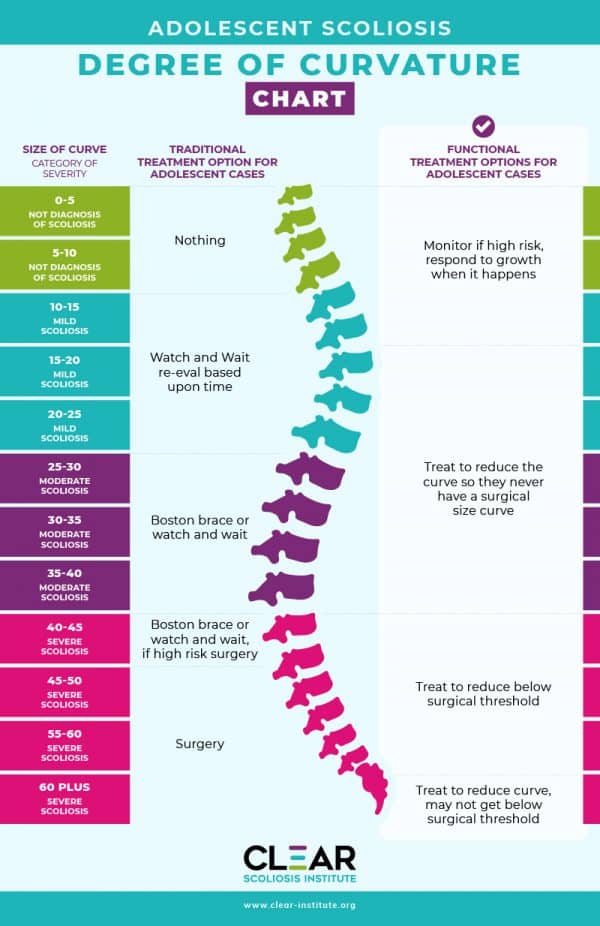
Scoliosis Degrees Of Curvature Chart
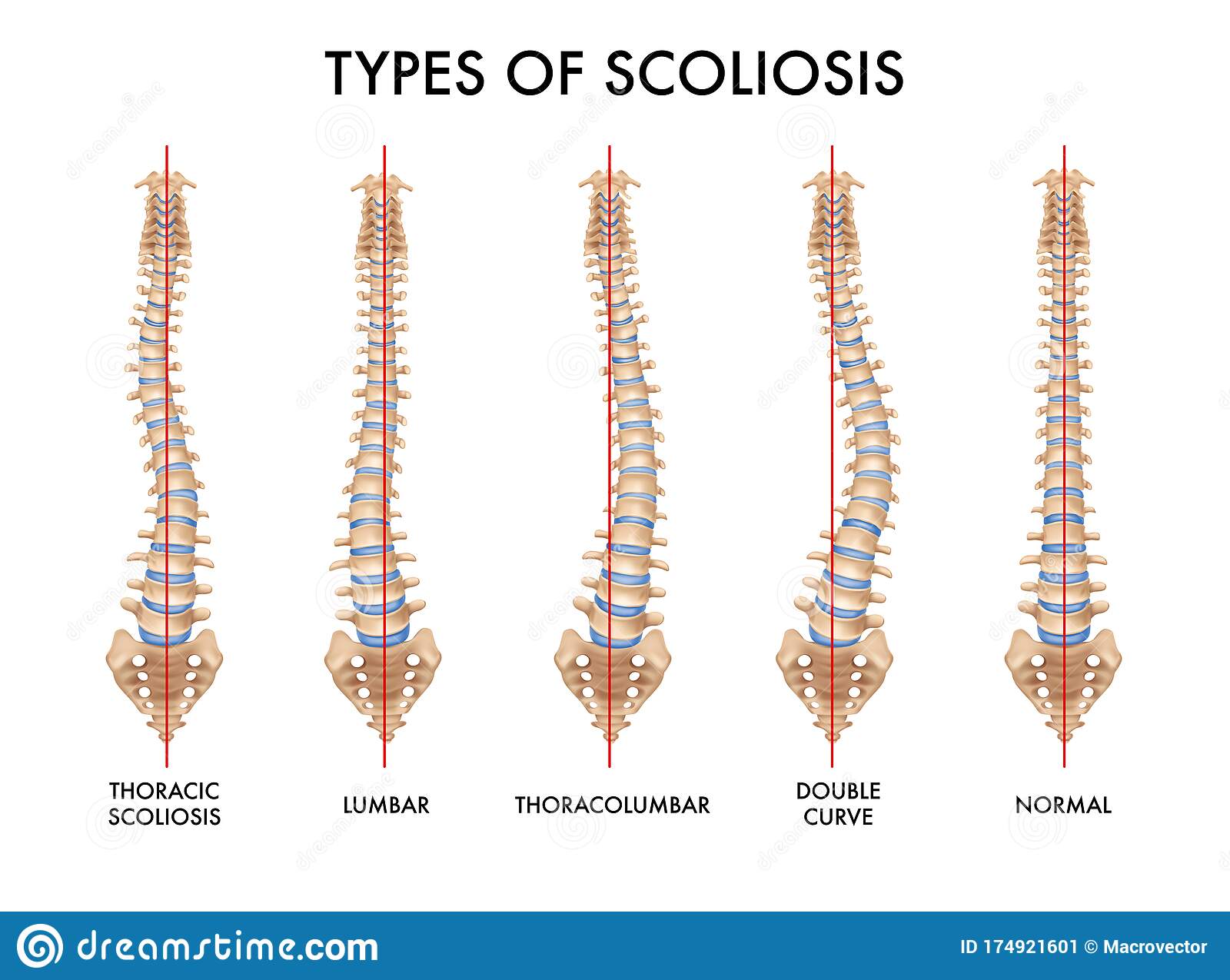
Scoliosis Degrees Of Curvature Chart, 57 OFF mpi.gov.la

Scoliosis Information Florida Orthopaedic Institute
Scoliosis Degrees Of Curvature Chart

Scoliosis Degrees Of Curvature Chart
Scoliosis Degrees Of Curvature Chart

Scoliosis Degrees Of Curvature Chart
Factors Such As Age, Symptoms, And Treatment Options Vary Depending On The Degree Of Curvature.
Cobb Angle Measurements Between 25 And 40 Degrees Are Diagnosed As Moderate Scoliosis, And 40+ Degrees Is Classified As Severe, While 80+ Is Considered Very Severe.
This Classification Is Instrumental In Determining The Appropriate Treatment Path And Includes Three Primary Categories:
Web The Scoliosis Progression Chart Provides A Detailed Overview Of The Different Degrees Of Curvature And Helps Healthcare Professionals Interpret The Severity Of The Condition.
Related Post: