
Burn Pediatric Chart
Burn Pediatric Chart - Web burns and fires are the fifth most common cause of accidental death in children and adults, and account for an estimated 3,500 adult and child deaths per year. The extent of large tbsa burns is often. Burns are painful wounds caused by thermal, cold, electrical, chemical or electromagnetic energy. Web use the “rule of nines” to estimate burn size for adult and pediatric. *infants and the elderly have thinner. Web this topic will review the emergency management of moderate to severe thermal burns in children ( table 1 ). Identify surface area of burn and significance guidelines and. The care of minor thermal burns, smoke inhalation,. Web this topic will review the emergency management of moderate to severe thermal burns in children. Web what is a clinical pathway? *areas of difference between the pediatric and adult population are represented by bold italics. The new chart reduces math errors, improving accuracy for better outcomes. Identify surface area of burn and significance guidelines and. Burns are painful wounds caused by thermal, cold, electrical, chemical or electromagnetic energy. Web this topic will review the emergency management of moderate to severe thermal burns in children ( table 1 ). Use lund & browder chart below to estimate percentages by age. Web the total body surface area (tbsa) of a burn was traditionally assessed using lund and browder burns chart that denotes the percentage of body surface and. Web burns and fires are the fifth most common cause of accidental death in children and adults, and account for an estimated 3,500 adult and child deaths per year. Web burn total body surface area (tbsa) % for children. Web to estimate the total body surface area (tbsa) burns in children, lund and browder charts may be used, which takes into account changes in the body proportions of growing. Web burns and fires are the fifth most common cause of accidental death in children and adults, and account for an estimated 3,500 adult and child deaths per year. The extent of large tbsa burns is often. Burns are painful wounds caused by thermal, cold, electrical, chemical or electromagnetic energy. The new chart reduces math errors, improving accuracy for better. Web burn total body surface area (tbsa) % for children. Web use the “rule of nines” to estimate burn size for adult and pediatric. Smoking and open flame are the. Identify surface area of burn and significance guidelines and. Web infant/pediatric lund and browder burn chart. *areas of difference between the pediatric and adult population are represented by bold italics. Categorize burn depth and its significance. The care of minor thermal burns, smoke inhalation,. Web burn total body surface area (tbsa) % for children. Web what is a clinical pathway? Web burns and fires are the fifth most common cause of accidental death in children and adults, and account for an estimated 3,500 adult and child deaths per year. Identify surface area of burn and significance guidelines and. Connecticut children’s cares for patients with mild to. *areas of difference between the pediatric and adult population are represented by bold italics.. Use lund & browder chart below to estimate percentages by age. Web burn total body surface area (tbsa) % for children. Web this topic will review the emergency management of moderate to severe thermal burns in children. Identify surface area of burn and significance guidelines and. When a child has a burn injury, immediate care is essential. The care of minor thermal burns, smoke inhalation,. *infants and the elderly have thinner. Rule of 9s diagram, calculator, definition, examples, practice questions, and math formula. Learn to calculate pediatric burned surface area with the rule of nines on the web's most interactive pediatric rule of nines learning tool. Burns are painful wounds caused by thermal, cold, electrical, chemical or. Web infant/pediatric lund and browder burn chart. Web although most burns in children are small and can be managed with care provided in the outpatient setting, there is a significant number of children with more. The care of minor thermal burns, smoke inhalation,. Categorize burn depth and its significance. Web this topic will review the emergency management of moderate to. The care of minor thermal burns, smoke. Use lund & browder chart below to estimate percentages by age. *areas of difference between the pediatric and adult population are represented by bold italics. Web this topic will review the emergency management of moderate to severe thermal burns in children ( table 1 ). Categorize burn depth and its significance. Web infant/pediatric lund and browder burn chart. The extent of large tbsa burns is often. *infants and the elderly have thinner. Web the total body surface area (tbsa) of a burn was traditionally assessed using lund and browder burns chart that denotes the percentage of body surface and. The care of minor thermal burns, smoke inhalation,. The extent of large tbsa burns is often. Roughly 25% of all burn injuries occur in children. Web burns and fires are the fifth most common cause of accidental death in children and adults, and account for an estimated 3,500 adult and child deaths per year. The new chart reduces math errors, improving accuracy for better outcomes. Web use the. Roughly 25% of all burn injuries occur in children. Web burns and fires are the fifth most common cause of accidental death in children and adults, and account for an estimated 3,500 adult and child deaths per year. Web what is a clinical pathway? Web the total body surface area (tbsa) of a burn was traditionally assessed using lund and browder burns chart that denotes the percentage of body surface and. Identify surface area of burn and significance guidelines and. Web use the “rule of nines” to estimate burn size for adult and pediatric. Smoking and open flame are the. Burns are painful wounds caused by thermal, cold, electrical, chemical or electromagnetic energy. Web this topic will review the emergency management of moderate to severe thermal burns in children ( table 1 ). Rule of 9s diagram, calculator, definition, examples, practice questions, and math formula. Web rule of nines burn chart for child, infant, baby, pediatrics, and adult. The extent of large tbsa burns is often. The new chart reduces math errors, improving accuracy for better outcomes. Learn to calculate pediatric burned surface area with the rule of nines on the web's most interactive pediatric rule of nines learning tool. Web infant/pediatric lund and browder burn chart. Connecticut children’s cares for patients with mild to.
CME Burns Management Charlie's ED

Paediatric TraumaPaediatric Burns Sub Guideline Trauma Victoria
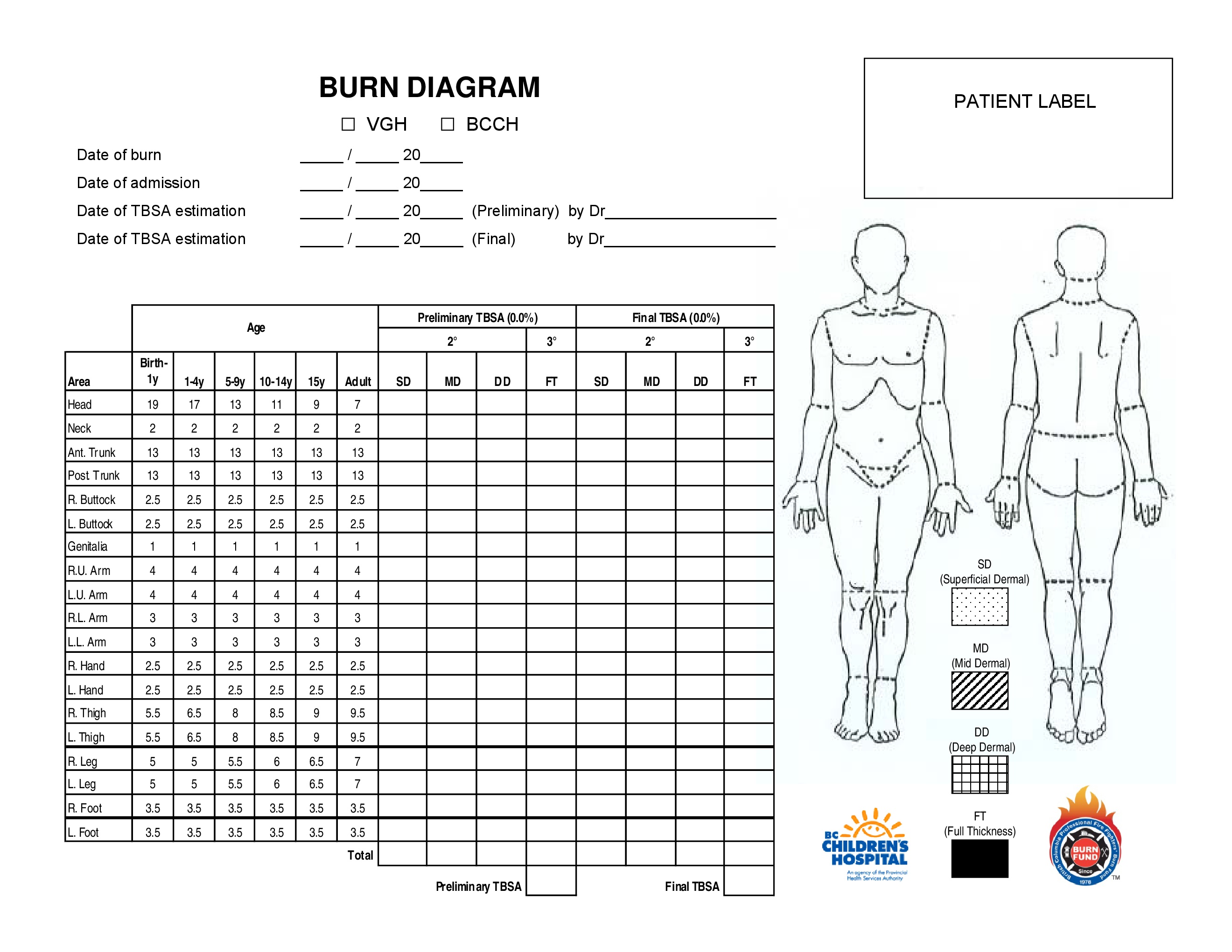
Pediatric Burn Diagram
Parkland Formula for Burns Pediatric and Adult Examples, Calculator
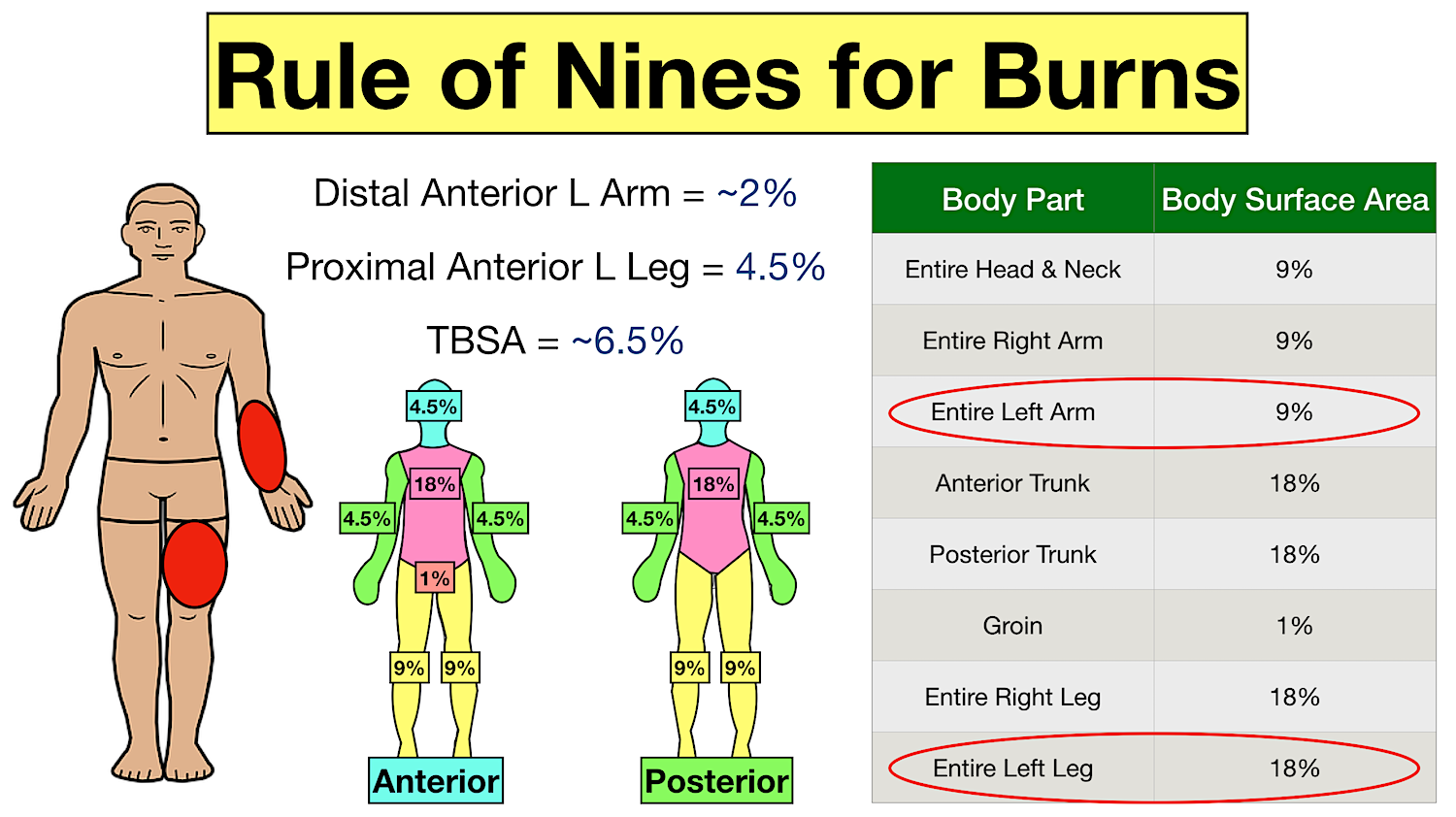
Rule Of Nines Burn Chart Printable

Rule Of Nines Pediatric Burn Chart

Paediatric Emergency Medicine Minor Burns in Children
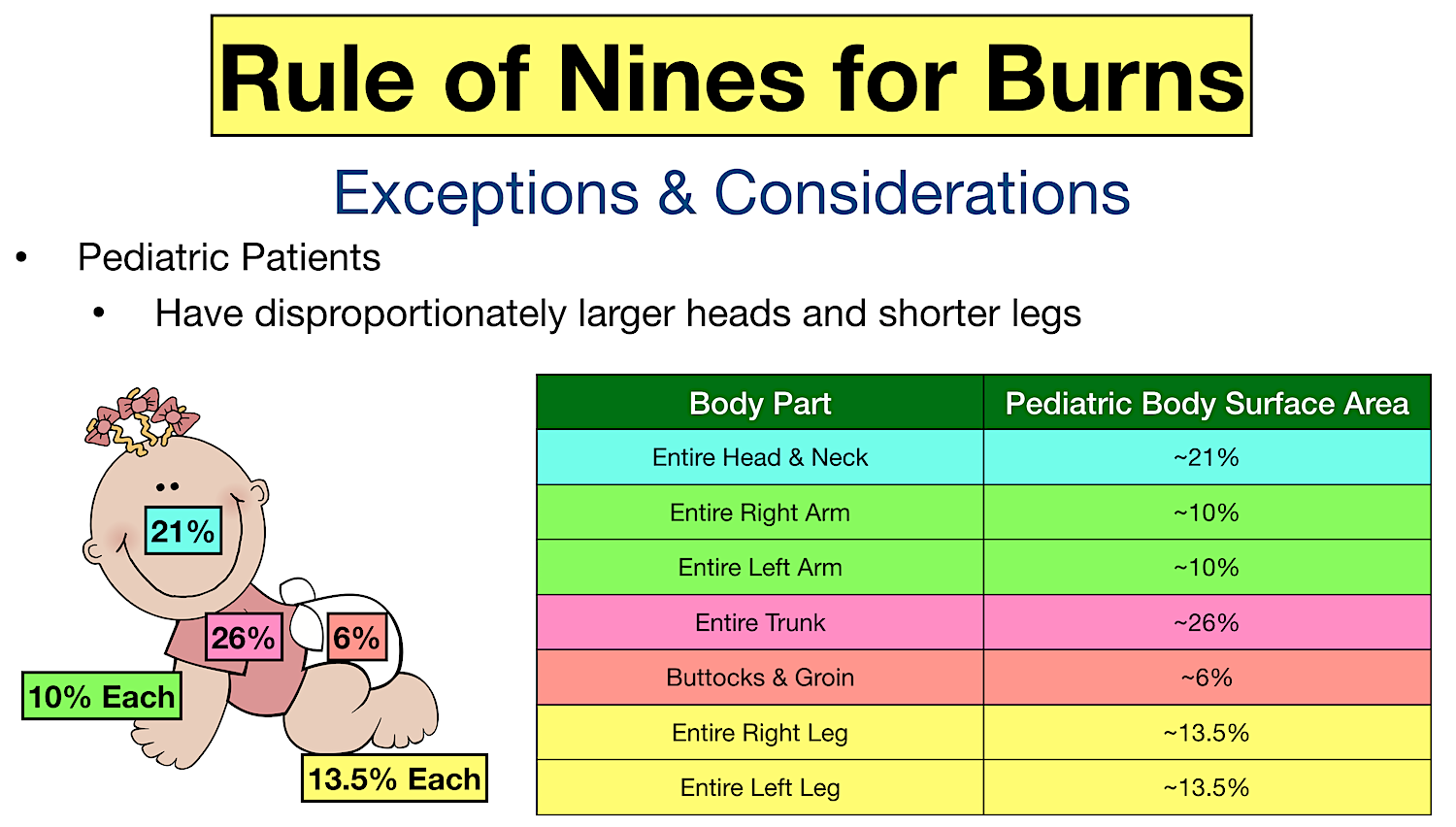
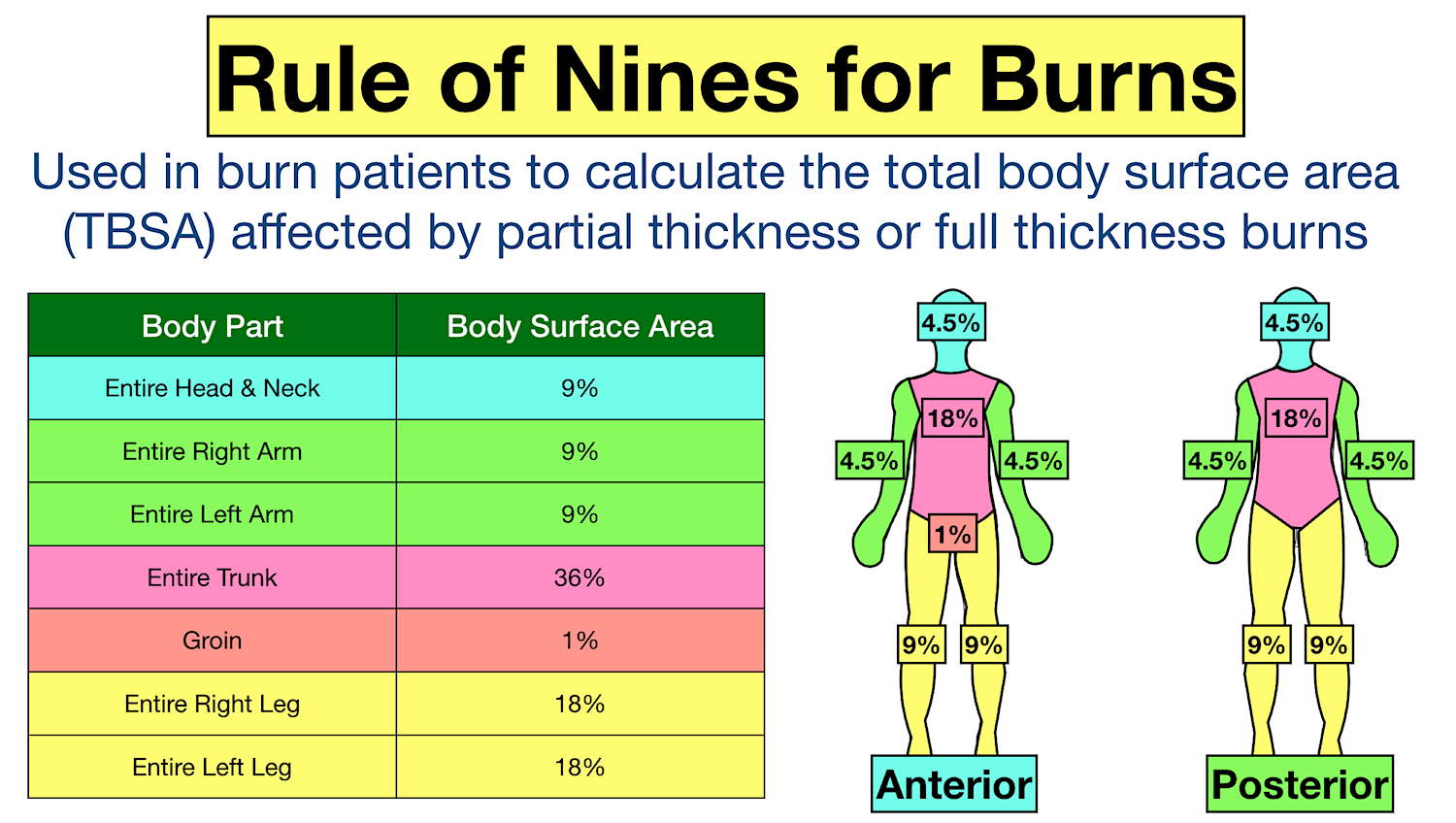
Rule of Nines for Burns Child and Adult Chart, Calculator, Definition
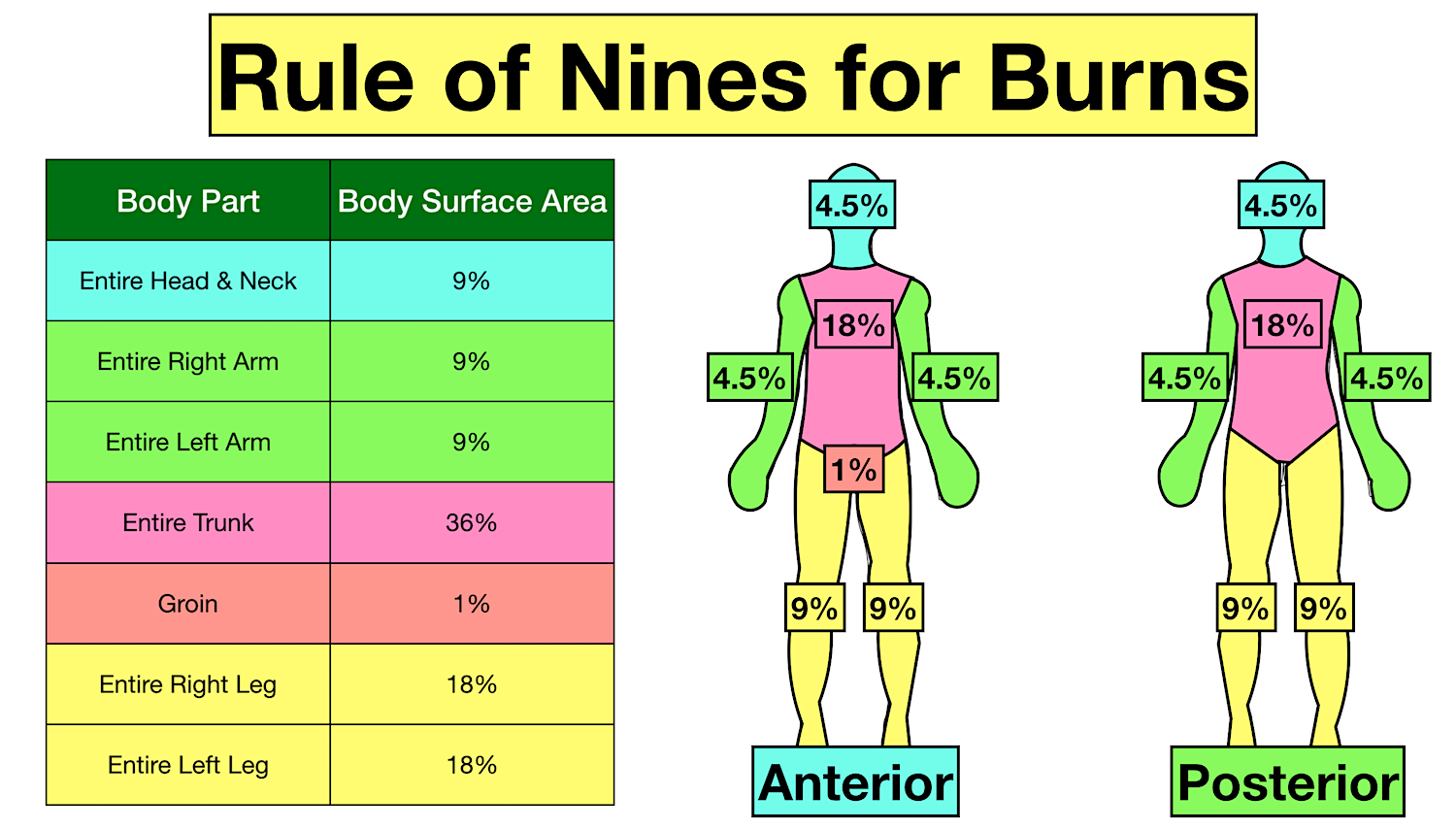
Rule of Nines for Burns Child and Adult Chart, Calculator, Definition

Major Burns in Children Pediatric Emergency Playbook
*Areas Of Difference Between The Pediatric And Adult Population Are Represented By Bold Italics.
Web Burn Total Body Surface Area (Tbsa) % For Children.
Web Although Most Burns In Children Are Small And Can Be Managed With Care Provided In The Outpatient Setting, There Is A Significant Number Of Children With More.
Web This Topic Will Review The Emergency Management Of Moderate To Severe Thermal Burns In Children.
Related Post: